The CTO's Playbook for Deploying Large Language Models at Enterprise Scale
Deploying LLMs in enterprise is fundamentally different from building a ChatGPT wrapper. Here is the architecture and governance framework I have refined across multiple deployments.
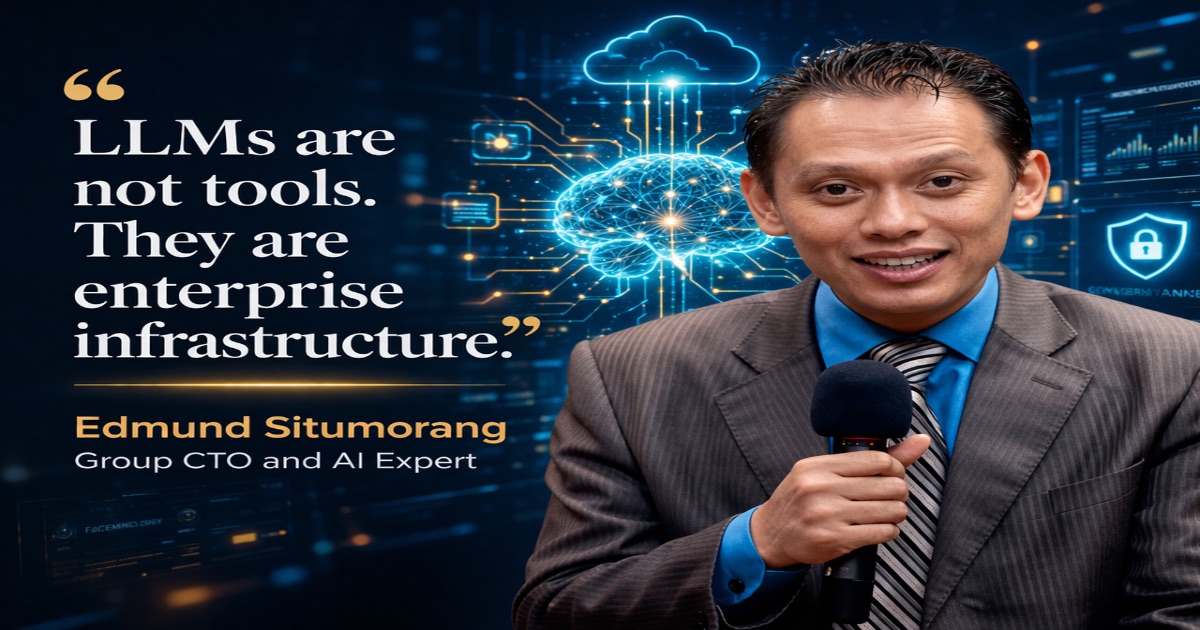
Beyond the ChatGPT Wrapper
The gap between an LLM demo and an enterprise LLM deployment is enormous. I have led deployments across regulated industries — insurance, financial services, mining — and the challenges are consistent: data privacy, latency, cost control, and governance.
Architecture Decisions That Matter
Model Selection. Not every use case needs GPT-4 class models. I run a tiered architecture: lightweight models for classification and routing, mid-tier models for summarization and extraction, and frontier models only for complex reasoning tasks. This reduces cost by 60 to 70 percent while maintaining quality.
RAG vs Fine-Tuning. Retrieval-Augmented Generation is the right default for most enterprise use cases. Fine-tuning makes sense when you need consistent style, domain-specific terminology, or significant latency reduction. In practice, I use RAG for 80 percent of deployments.
Infrastructure. Run inference on dedicated GPU clusters for predictable latency and data sovereignty. For organizations in Southeast Asia, this often means on-premises or regional cloud deployment to comply with data residency requirements.
The Governance Layer Most Teams Skip
Every enterprise LLM deployment needs four governance components:
Input guardrails — Filter and validate every prompt before it reaches the model. This prevents prompt injection and ensures compliance with acceptable use policies.
Output validation — Every response passes through content filters, fact-checking against your knowledge base, and confidence scoring before reaching the end user.
Audit trail — Log every interaction with full context. In regulated industries, this is not optional. Build it from day one.
Human escalation — Define clear thresholds where the system routes to human experts. The best AI systems know when they do not know.
Cost Optimization in Production
Enterprise LLM costs can spiral quickly. My framework for cost control includes semantic caching for repeated queries, prompt compression techniques, intelligent model routing based on query complexity, and aggressive batching for non-real-time workloads.
With these optimizations, I have reduced per-query costs by 75 percent while improving response quality through better prompt engineering.
The Path Forward
LLM deployment is not a one-time project. It is an ongoing capability that requires dedicated MLOps, continuous evaluation, and regular model upgrades. Build the operational muscle now — the pace of model improvement means your deployment architecture will need to evolve every quarter.
Share this article
Related Articles
Why Every Enterprise Needs an AI Strategy Before Competitors Build Theirs
Organizations without a deliberate AI strategy are not standing still — they are actively falling behind. Here is the framework I use to help enterprises build theirs.
Generative AI ROI: How to Measure What Actually Matters
Most organizations cannot quantify their generative AI investments. Here is the measurement framework I use to prove — and improve — AI ROI across the enterprise.
RAG vs Fine-Tuning: Choosing the Right Approach for Your Enterprise LLM
The RAG vs fine-tuning debate is the most common architectural question I get from enterprise teams. Here is my decision framework based on real-world deployments.